 |
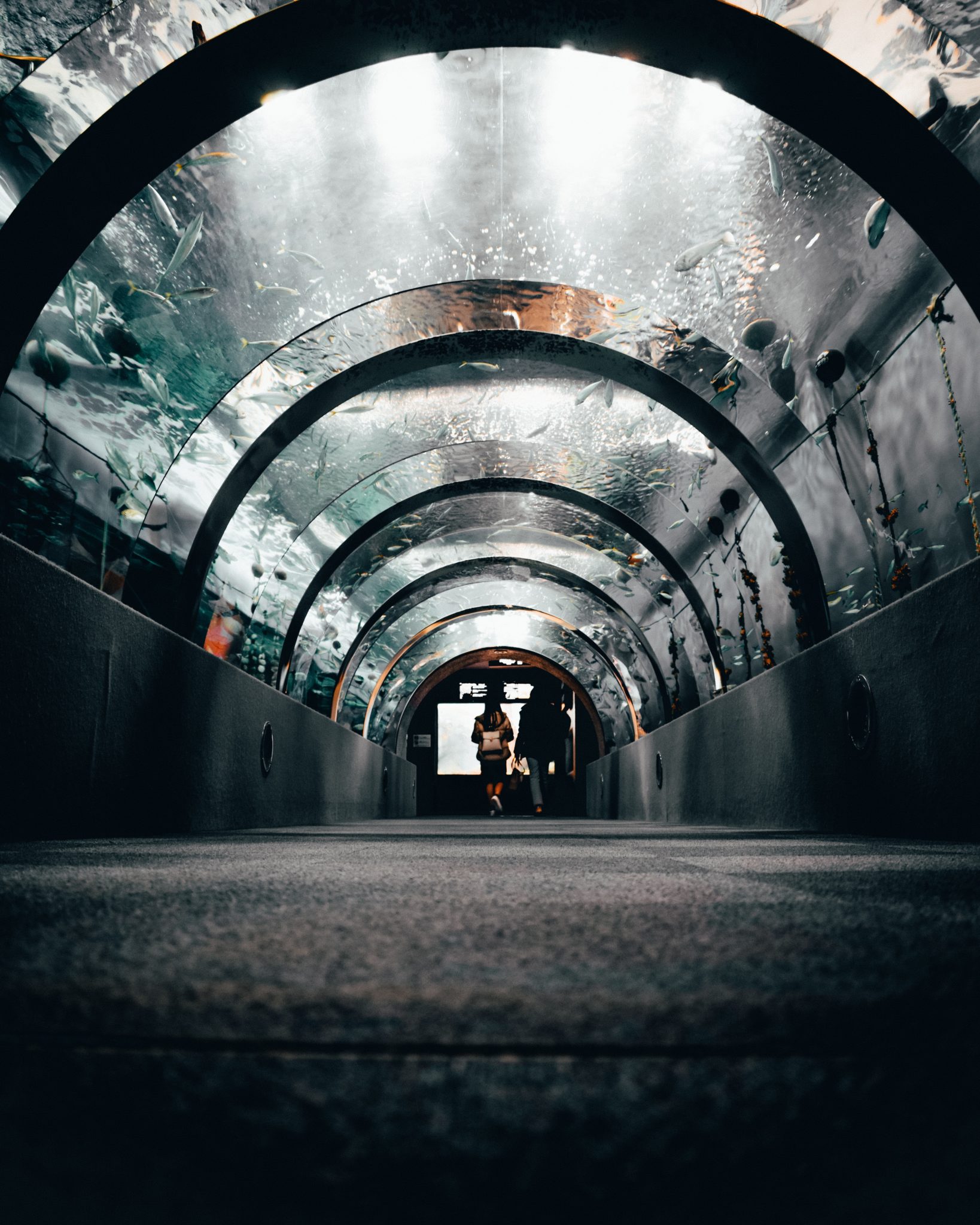
The visionSuspended in the time and space of another world,our perspective is inverted as we look up instead of down at the surface of the sea.Our terrestrial lives are far away on the other side of the interface, and time stretches out before us. In that new space, the assumptions and expectations of the familiar dissolve, distractions are removed, and a vibrant presence causes our imagination to expand, our observation to deepen, and our sense of connectedness to ourselves, each other, and other life to spread and myelinate.Prism is an underwater sanctuary, embedded in a coral reef,which gives its inhabitants the first person experience of living underwater.It is a looking glass, a resolved world made visible to us by a magical lens that transforms a realm usually blurred by water into a place we can sense, feel, and know. We go into that space together. We live together there at the edge of comprehension, in one of the most remote corners of possibility for humans, and share our wonder at the unthinkable beauty of it. Through the refraction, we coauthor our excitements and discoveries, and together we create ideas, meaning, and purpose - new human culture incubated by the reef. |
The space will hold gatherings of people in one of the largest underwater observatories that has existed,and will be gorgeously and meticulously crafted by artists and engineers.Prism is the first habitat of sea or space that has emphasized communing with our living planet over technical objectives. In this moment when our relationship to Earth is at its most precarious, revealing our place in the whole context of interdependent life in the psphere is a transcendental experience. |
|
|
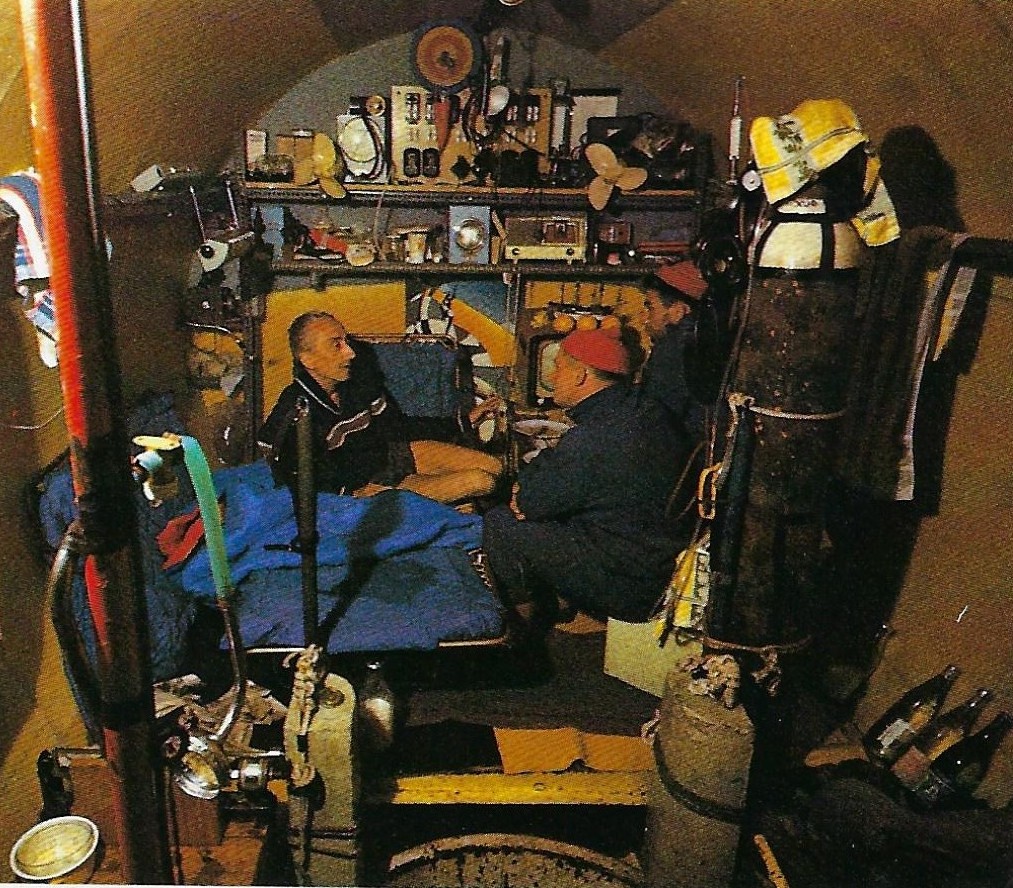
Other HabitatsPrism’s cultural lineage can be traced back to the early 1960s, when Jacques Cousteau and his team built Conshelf I off the coast of Marseilles at 10m of depth, then later Conshelf II in the Red Sea and Conshelf III in the Mediterranean.The underwater habitats since Cousteau were designed primarily for work, and they were kept at ambient pressure to enable divers to have extended bottom time for scientific and engineering activities underwater.As a result, they have tended to be crowded, uncomfortable, and utilitarian. Since the 1960s, over sixty-five underwater habitats have been built, but only two are still in operation—the Aquarius research lab and the Jules Verne Lodge, both located in Florida. These two habitats are single-purpose spaces that are small and industrial, with a very different sensibility from that of PRISM.There are also a number of restaurants and hotels scattered around the world that feature underwater rooms, but as their buildings are contiguous with the surface, they are not considered habitats and are not designed for more than brief visits. |

Shanee Stopnitzky
CO-FOUNDER
Shanee is a complex systems marine scientist, mother of submarines, experiential artist, and evangelist of embodying wonder. During her PhD, she used coral reefs as model systems to understand complex nonlinear dynamics in ecology, with interests in predictable phenomena that are revealed by information entropy, mechanisms of non-equilibria regulation, and chaos. Shanee has worked in applied marine science and conservation in the public and private sectors, with a focus on marine ecosystem impact assessment and mitigation. She also works as an installation artist, and is the founder of the Community Submersibles Project — an open source project to increase access to ocean exploration. Shanee has spent over a year of her life underwater to date and is looking forward to dramatically increasing that number. She loves to make things, explode things, and talk to animals.
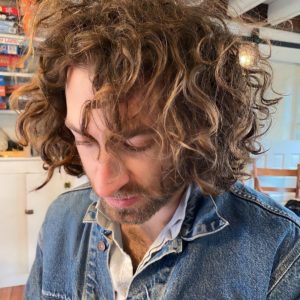
Adam Krellenstein
CO-FOUNDER
Adam is a philosopher, engineer, and investor. He is one of the creators of the Counterparty digital currency and public-blockchain platform for smart contracts, as well as the co-founder and erstwhile CTO of Sympnt, a financial technology company based in New York City. Adam has recently authored a treatise on natural philosophy and is currently building a mechanical clock that operates according to the principles of Aristotelian physics. Adam enjoys riding horses in circles, sailing nowhere in particular, and hanging out in small, dark and confined spaces.
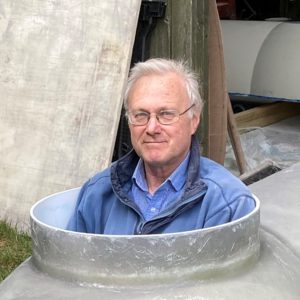
Paul Moorhouse
CHIEF ENGINEER
Paul is one of the most experienced and accomplished submarine engineers in the world. He began his submarine career designing reactors for real nuclear submarines at Rolls Royce. Between 1986 and 2005, he designed and built a series of 4 small diesel-electric submarines, and from 2006 to 2012, Paul was Managing Director and Principal Engineer of M Subs Ltd, where he was also co-designer of the world’s largest seagoing AUV, the Mobile Anti-Submarine Training Target — MASTT. Paul has also worked with Triton Submarines from their formation and remains their principal consulting engineer. He recently launched Steel Fish Ltd, which will design and build the prototype ATOEM platform.
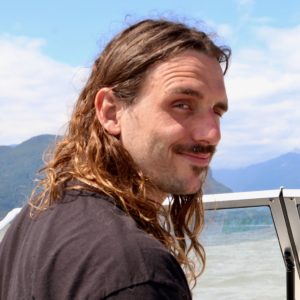
Carl Boyer
ENGINEER
Carl earned his degree in mechanics from the prestigious WyoTech mechanical school and started his career in the automotive industry. In 2014, Carl was introduced to the world of personal submersibles after learning about Trustworthy, a submarine being built locally in Kansas. He joined the team as a mix of engineer, mechanic, and operations specialist, designing the onboard systems for the Kittredge-350 pressure vessel and working on the dive crew. In 2015, he joined Deep Sea Submarine Pisces VI and was responsible for designing and building out a refit of a 2000m submarine that had been purchased as a blank pressure vessel, as well as piloting the sub and working on the operations crew. Carl loves scuba diving and learning how every single mechanical object on Earth functions.
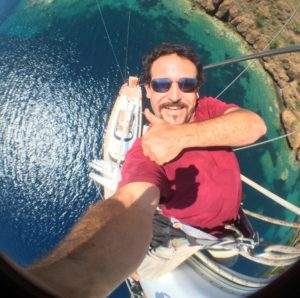
Pierre Beltran
ENGINEER
Pierre Beltran is Mexican/French born and raised in Mexico from a family fan to water sports and DIY/Mechanical projects. Sailing from childhood and a diving instructor and cave diver by the age of 18, after finishing his industrial engineering degree, joined the yachting industry as a Chief Engineer on several vessels in order to visit and dive some of the most beautiful places on the planet. He began working on Pisces VI submarine as an engineer and part of the operations crew in 2021, and is excited to combine all these experiences into PRISM, while he continues to be an avid diver and technical diver.
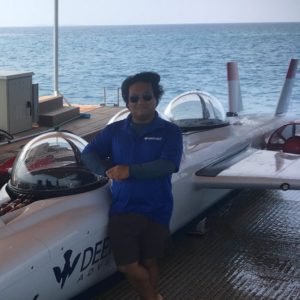
Edwin Chui
ELECTRICAL ENGINEER
Edwin began his Electrical Engineering career at SpaceX where he designed the Falcon 9 engine controller, as well as control electronics on other vehicles: Dragon, Crew Dragon, Falcon 1, Falcon Heavy, Grasshopper, and F9R-dev. He was also their in-house polka instructor. He then co-founded Signal Laboratories, a telecommunications technology company using radio telescope techniques to enable long range communication in cell phones. He then went to DeepFlight, where he designed the power, control, and life-support electronics for the DeepFlight Super Falcon 3s, a three-person submersible for research and tourism. Since then Edwin has taken up full-time consulting, working with a variety of clients in climate change and methane mitigation, aerospace, transportation, and CRISPR genomics. During the COVID Pandemic, Edwin and his colleagues founded RespiraWorks to create an open-source and freely-licensed, fully-functional ICU ventilator. They currently have over 200 volunteers in 11 countries. Edwin likes adventures and spicy food.
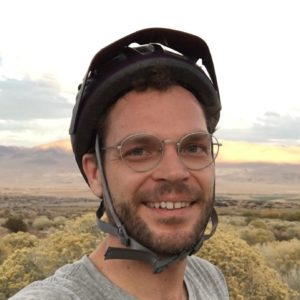
Stephan Andrews
ENGINEER
Stephan is an experienced Mechanical Design Engineer with a design and integration background that includes a wide variety of project types, including developing the metal 3D printer used to print the latest rocket parts for SpaceX, and the levitation engines for Virgin Hyperloop One. He is currently consulting full-time with clients in the subsea technology, atmospheric carbon capture, medical device, and semiconductor industries. Stephan is an avid diver and sailor and wants to be on and under the sea as often as possible.